
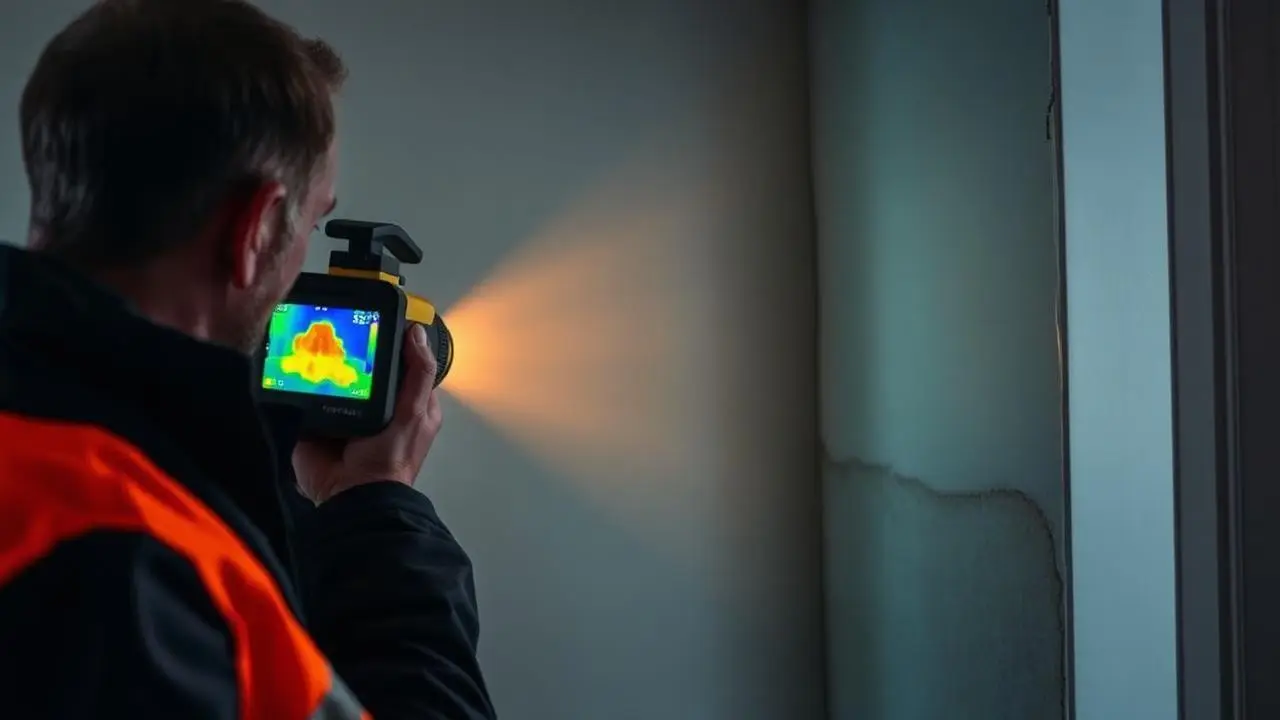
Hidden leaks are expensive because of the delay, not the water. By the time a ceiling stains, the leak has usually been running for weeks behind tiles or under a screed, and the repair bill has moved from a plumbing job to a redecoration job.
The early signs people miss
Every one of these appears well before visible water does, and each is worth investigating on its own.
- A water bill that steps up with no change in usage
- A pump that cycles on when nothing in the house is running
- Warm or cold patches on a floor that shouldn't have them
- Loose, hollow or discoloured tiles, or grout that stays dark
- A persistent musty smell in a cupboard, a guest bathroom or a store room
- Peeling paint, blistered skirting or salt bloom low on a wall
- Pressure that drops overnight when every outlet is shut
The overnight meter test
It's crude and it works. Close every tap, appliance valve and outlet in the property, note the water meter reading, then read it again after several hours with nothing used. Any movement means water is escaping somewhere between the meter and the fixtures.
If you have a tank and pump arrangement, listen for the pump starting during that quiet period. A pump that runs with no demand is one of the clearest leak signals in a UAE villa.
How professional leak detection works
The point of proper detection is to open the wall once, in the right place. Thermal imaging maps temperature differences across surfaces to show where water is tracking. Acoustic detection amplifies the sound of a pressurised leak through the structure. Moisture meters quantify how wet a substrate actually is rather than how wet it looks. Pressure testing isolates a circuit and proves whether it holds. Tracer gas is used where everything else is inconclusive.
Used together, these narrow a leak to a small area without demolishing a bathroom on a hunch.
Where leaks actually come from in UAE homes
Some sources are far more common than others in this housing stock, and the pattern is fairly consistent across Dubai villas and apartments.
- Failed waterproofing at a shower threshold or balcony door — the single most common cause of a stained ceiling below
- Perished silicone and grout letting water past the visible surface for months
- Concealed pipework corroding or failing at a joint inside a wall or screed
- Water heater relief valves and tank connections dripping into a ceiling void
- AC condensate lines blocked or disconnected, mimicking a plumbing leak exactly
- Roof and terrace outlets ponding water against an upstand
- Pool and irrigation lines losing water into the ground with no visible sign at all
What the repair involves
Once located, the sequence is fix, dry, then reinstate. Drying matters: closing up a wet substrate traps moisture and produces mould and blown finishes a few months later. Expect meter readings to confirm the area is dry before tiling or plastering goes back.
If waterproofing was the cause, patching the tile is not the repair. The affected wet area needs the membrane made good, the detail corrected at the junction and a flood test before anything covers it again.
Preventing the next one
Renew silicone in wet areas on a cycle rather than when it fails. Flush AC condensate lines with the annual service. Keep terrace and roof outlets clear. And if you're renovating a bathroom, treat the waterproofing and flood test as the hold point of the whole job — it's the cheapest moment you'll ever have to get it right.
What leak detection costs, and who pays for the damage
Non-destructive leak detection in a Dubai apartment or villa typically costs AED 800 to AED 2,500 depending on area and method — acoustic, thermal imaging, moisture mapping or tracer gas. Compared with opening three walls to find the fourth one was wet, it is the cheapest hour of the whole job.
Liability depends on where the leak is. Inside your demised area it is normally yours; in a common riser or the building's plumbing it usually falls to the owners' association. Either way, evidence decides the conversation: a dated detection report with thermal images and moisture readings settles disputes with neighbours, building management and insurers far faster than a description.
Preventing the next one
Most UAE leaks are predictable. Flexible hoses under vanities perish in the heat, water heater safety valves weep, silicone in shower trays opens up, and roof and terrace outlets block with dust before the one week a year it rains hard.
A twenty-minute check twice a year prevents the majority of the claims we are called to.
- Replace flexible connectors every 4 to 5 years, before they fail
- Check under every vanity and behind the washing machine for staining
- Clear terrace and balcony drains before the rainy season
- Renew shower and bath silicone the moment it darkens or lifts
- Take a meter reading before a long trip and again on return
Leak detection in Dubai homes
Slab leaks, chilled water lines, concealed cistern feeds and failed shower trays are the usual culprits in JVC and JVT apartments and in Mudon and Arabian Ranches villas. We trace the leak first with non-destructive methods, then open only what has to be opened, then make good so the repair is invisible when we leave.
We locate leaks with thermal, acoustic and pressure testing, then handle the repair and the reinstatement so you deal with one team rather than three. Send us a photo of the damp area to start.