
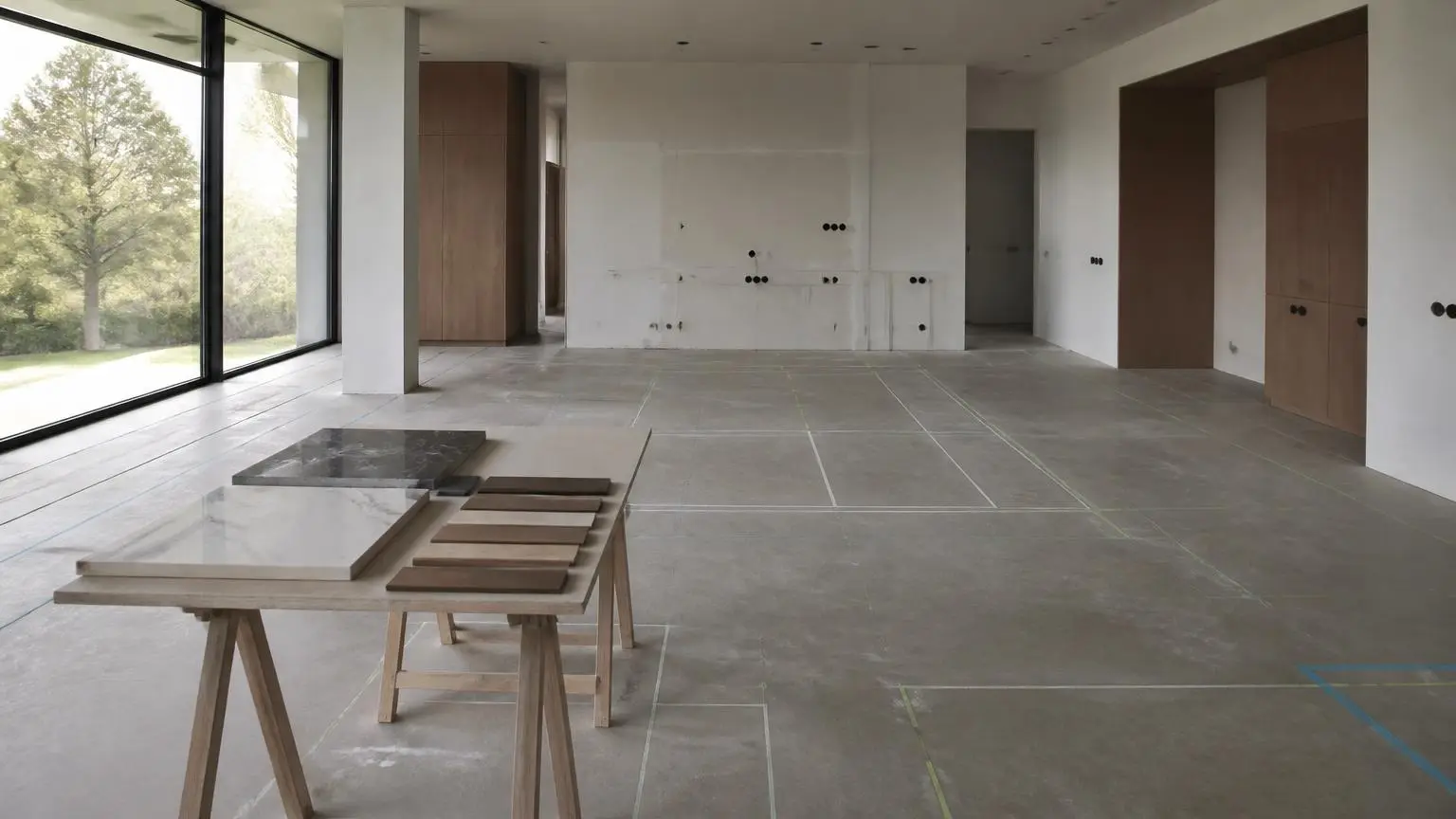
A villa renovation rarely goes wrong on site. It goes wrong in the two weeks before mobilisation, when the scope is still an idea rather than a document. This is the order we work through with owners in Dubai, and why each step matters.
1. Establish what you actually own
Before design, we confirm the as-built condition. Community rules, developer handover drawings and the physical reality of the property often disagree, and the difference becomes a variation later if nobody checks it now.
- Measured survey of the areas in scope
- Photographic record of existing damage and finishes
- Identification of structural, MEP and waterproofing constraints
2. Understand the approval route early
In most Dubai communities, work that touches structure, facades, external areas or building services needs approval from the master developer or the community management before it can start. Internal cosmetic work is usually lighter, but access, working hours and noise restrictions still apply.
The practical point is timing: approvals are a lead item, not an afterthought. We identify what is required, who issues it and how long it typically takes, then plan mobilisation around that rather than against it.
3. Fix the scope in writing
A scope is not a mood board. It states what is removed, what is installed, which specification applies, who supplies what and what has deliberately been excluded. Exclusions matter as much as inclusions — they are where disputes live.
4. Agree the sequence and the disruption
Decide now whether the property will be occupied. Occupied works need sealed zones, protected access routes, controlled working hours and a realistic acceptance that some weeks will be noisy. Vacant works run faster and cost less to protect.
5. Decide how completion will be judged
Set the acceptance standard before work begins: a joint inspection, an itemised defect list, an agreed close-out window, then handover. When the finish line is defined at the start, nobody argues about it at the end.
What a villa renovation really costs in Dubai
Owners usually ask for a price before there is a scope, and then wonder why two quotes differ by 40 per cent. As a working range in 2026, a light refresh of a three-bedroom villa in Mudon or Town Square — repaint, minor joinery, new sanitaryware, deep clean — lands between AED 60,000 and AED 120,000. A full villa renovation in Arabian Ranches or Jumeirah Park with a new kitchen, two rebuilt bathrooms, flooring throughout, false ceilings and lighting typically runs AED 250,000 to AED 700,000. Structural changes, pools, landscaping and imported stone push it further.
The number that matters is not the headline figure, it is the exclusions. A quote that omits waterproofing, MEP alterations, permits, protection and final cleaning is not cheaper; it is unfinished. Ask every contractor to price the same written scope, and the comparison becomes honest in one page.
- Design and survey: 3 to 6 per cent of construction value
- Permits and community approvals: AED 3,000 to AED 15,000 depending on community
- Contingency you should actually hold: 10 to 15 per cent of contract value
- Payment structure: milestone-based against completed work, never a large upfront lump
Choosing a contractor without gambling
Dubai has a large gap between a licensed renovation contractor and a group of tradesmen with a van. The licence, the insurance and the ability to obtain a work permit in your community are not paperwork details — they decide whether security lets your team through the gate on day one.
Before you sign anything, ask for five things and read them properly. Contractors who work to a proper standard produce them in a day; the ones who cannot are telling you something useful.
- Valid DED trade licence covering building contracting or fit-out
- Third-party liability and workmen's compensation insurance certificates
- Two recent references in a comparable community, with photos and contact details
- A written programme showing sequence, key dates and disruption windows
- A defects liability commitment in writing, normally 12 months
How long a villa renovation takes
A realistic programme for a three to five-bedroom villa is 8 to 16 weeks on site, plus 2 to 5 weeks before that for survey, scope, approvals and material lead times. Imported stone, bespoke joinery and specialist glazing are the usual reasons a programme slips, so we order those first and build the sequence around them, not the other way round.
If you are living in the property during the works, add time rather than pretending you will not. Sealed zones, controlled access and evening quiet periods are the difference between an inconvenient project and an unliveable one.
Villa renovation across Dubai communities
We plan and run full home renovations in Arabian Ranches, Mudon, Damac Lagoons and Jumeirah Village Triangle, where community approvals, working hours and contractor access rules differ from one master developer to the next. The sequence above is the same everywhere, but the approval lead time is not, so we confirm your community’s requirements before we quote a start date.
If you are at the point of turning an idea into a scope, we can carry out the survey and produce the written scope first, without committing you to the construction works.