
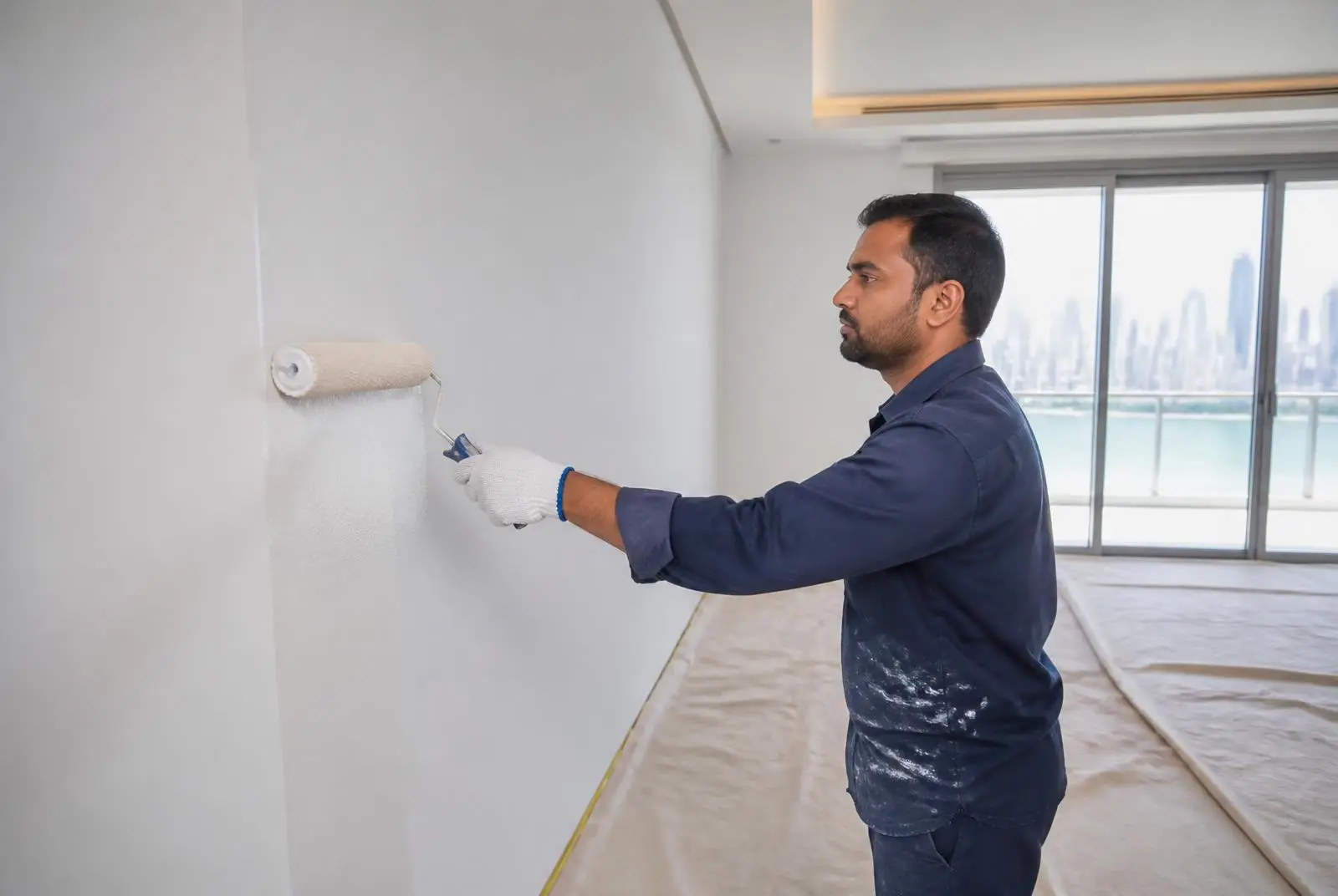
Painting looks like the simplest job in a home, which is why it produces the widest spread of quotes. The finish you actually see in six months is decided by surface preparation, coat count and paint selection — three things a cheap quote quietly removes.
How villa painting is priced in Dubai
Serious quotes are built from measured wall and ceiling area, not from the number of bedrooms. On top of area sit the variables: ceiling height, occupied or vacant, how much filling and sanding the walls need, whether the existing colour is dark, and whether external elevations need access equipment.
Ask any painter to state the coat count, the preparation scope and the product name and finish. If those three things aren't written down, you aren't comparing quotes — you're comparing guesses.
- Measured area of walls, ceilings and joinery in scope
- Preparation: filling, sanding, crack repair, stain blocking, primer
- Number of coats and the exact product and sheen level
- Protection, masking, daily cleaning and final clean
- Access: ladders, towers or scaffold for double-height and external work
Preparation is the job
Roughly two-thirds of the labour in a good painting job happens before any finish coat goes on. Walls are washed, cracks cut out and filled, filler sanded flat, patches spot-primed so they don't flash, and everything not being painted is masked and covered.
The tell-tale signs of a skipped prep stage show up within weeks: flashing patches where filler drank the paint, hairline cracks reappearing through the finish, roller texture visible under raking light, and paint peeling from a dusty or chalky substrate.
Two coats is a minimum, not a specification
Two full coats over a primed, prepared surface is the baseline for a same-colour refresh. Going from a dark colour to white, covering water stains, or painting fresh plaster usually needs a primer plus two or three coats. A quote that promises a colour change in a single coat is describing a translucent wall.
Choosing paint for the UAE climate
Interiors are mostly about washability. Matt hides wall imperfections best but marks easily; a washable matt or a low-sheen emulsion is the right compromise for family villas with corridors and children. Kitchens and bathrooms want a moisture-tolerant, wipeable finish, and anti-fungal formulations are worth it in rooms that get closed up with the AC off.
Exteriors are a different problem. Dubai's combination of UV intensity, heat cycling, salt-laden coastal air and blown sand destroys ordinary emulsion. Use a proper exterior elastomeric or acrylic system with a matched primer, and expect a real repaint cycle of a few years on exposed elevations rather than the decade a European product datasheet implies.
How long it takes and how to live through it
A single room is typically a one-to-two-day job. A full four-bedroom villa interior runs to a week or more with proper drying time between coats. Exterior work depends on access and on the season — painting a facade in peak summer afternoon heat causes the film to skin too quickly and finish poorly.
If you're living in the property, work room by room, agree which rooms are out of use each day, and insist on daily clean-down. Water-based paints have come a long way on odour, but ventilation still matters, especially in bedrooms.
Questions worth asking before you sign
Cheap quotes aren't dishonest so much as incomplete. These questions expose the gap.
- How many coats, over what primer, and which exact product?
- What preparation is included, and what would be charged extra?
- Who moves and covers the furniture?
- Is the final clean included, and who removes the waste?
- What happens if a wall flashes or cracks reappear in three months?
Colour, sheen and what survives UAE light
Dubai daylight is brutally bright and strongly warm. A white that looks crisp on a London wall reads yellow here, and a mid-grey reads blue. Test your shortlist on the actual wall, in a patch at least a metre square, and look at it at 9am, 2pm and under your own evening lighting before committing to 40 litres.
Sheen matters as much as colour. Matt hides wall imperfections but marks easily in a family villa; a washable matt or a low-sheen eggshell is the practical compromise for corridors, stairwells and children's rooms. Bathrooms and kitchens want a moisture-resistant finish, and exterior walls need an elastomeric or high-build masonry coating that can move with the substrate.
How often you should repaint in this climate
Interior walls in a well-kept villa hold up for 4 to 6 years, sooner in high-traffic areas or after tenants. Exterior elevations are a different story: UV, salt-laden air near the coast and 50-degree surface temperatures degrade coatings quickly, and 3 to 5 years is a realistic exterior cycle in Arabian Ranches, Jumeirah Park or The Springs.
Repainting on time is cheaper than repainting late. Once a coating cracks and water reaches the render, you are paying for crack stitching and substrate repair before a brush is lifted — routinely double the cost of a straightforward recoat.
Interior and exterior painting by community
Exterior painting in Mudon, Arabian Ranches and Damac Lagoons has to survive direct sun and sand-laden wind, which makes preparation and coating specification more important than colour. Interior repainting in JVT and Motor City townhouses is usually part of a wider turnaround alongside flooring and making good after electrical work.
We quote painting from a measured area with the preparation, coat count and product written into the scope, so you can see exactly what you're paying for. Send us a few photos and the villa size for a free quote.